Scott Love

Scott Love

Researcher

INRAE

I’m a cognitive neuroscientist currently using neuroimaging techniques in farm animals to investigate: 1) how early environment influences behavioural and neurobiological development and 2) social perception and its underlying neural mechanisms.

Since November 2017, I have been a researcher (Chargé de Recherche) at the PRC (Physiologie de la Reproduction et des Comportements) research unit in Nouzilly, France.

Also check out the INRAE Farm Animal Cognition and Welfare network that I help to animate.

Brains Comparative Neuroscience Development Social Perception MRI EEG

Experience

Researcher (Chargé de Recherche)

INRAE-PRC

Postdoc Researcher

Indiana University

Education

PhD in Psychology

University of Glasgow, UK

M.Sc. Research Methods of Psychological Science

University of Glasgow, UK

MA Social Sciences – Psychology & Philosophy

University of Glasgow, UK

Recent Publications

Facial blushing and feather fluffing are indicators of emotions in domestic fowl (Gallus gallus domesticus)

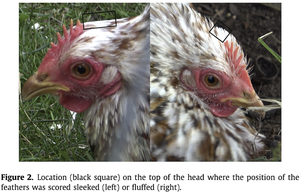
The study offacial expressions inmammals provided great advances inthe identification of their emotions and then inthe comprehension oftheir sentience. So far, this area of research has excluded birds. With anaturalist approach, we analysed facial blushing and feather displays indomestic fowl. Hens were filmed insituations contrasting inemotional valence and arousal level: situations known toindicate calm states (positive valence /low arousal), have rewarding effects (positive valence /high arousal) orinduce fear-related behaviour (negative valence /high arousal). Head feather position as well as skin redness ofcomb, wattles, ear lobes and cheeks varied across these situations. Skin ofall four areas was less red insituations with low arousal compared tosituations with higher arousal. Furthermore, skin redness ofthe cheeks and ear lobes also varied depending on the valence of the situation: redness was higher insituations with negative valence compared tosituations with positive valence. Feather position also varied with the situations. Feather fluffing was mostly observed inpositively valenced situations, except when hens were eating. We conclude that hens have facial displays that reveal their emotions and that blushing isnot exclusive tohumans. This opens apromising way toexplore the emotional lives ofbirds, which is acritical step when trying toimprove poultry welfare.

Sheep (Ovis aries) training protocol for voluntary awake and unrestrained structural brain MRI acquisitions

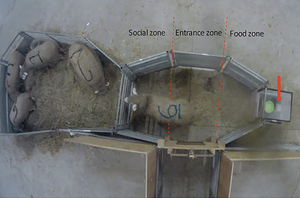
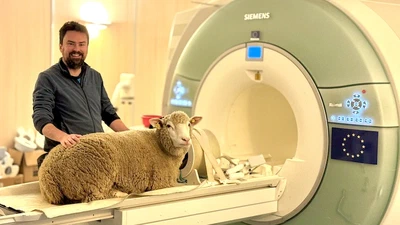
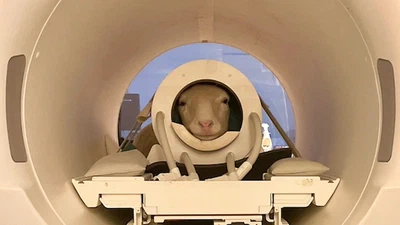
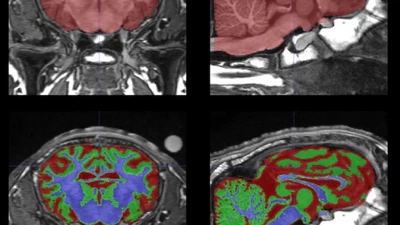
Magnetic resonance imaging (MRI) is a non-invasive technique that requires the participant to be completely motionless. To date, MRI in awake and unrestrained animals has only been achieved with humans and dogs. For other species, alternative techniques such as anesthesia, restraint and/or sedation have been necessary. Anatomical and functional MRI studies with sheep have only been conducted under general anesthesia. This ensures the absence of movement and allows relatively long MRI experiments but it removes the non-invasive nature of the MRI technique (i.e., IV injections, intubation). Anesthesia can also be detrimental to health, disrupt neurovascular coupling, and does not permit the study of higher-level cognition. Here, we present a proof-of-concept that sheep can be trained to perform a series of tasks, enabling them to voluntarily participate in MRI sessions without anesthesia or restraint. We describe a step-by-step training protocol based on positive reinforcement (food and praise) that could be used as a basis for future neuroimaging research in sheep. This protocol details the two successive phases required for sheep to successfully achieve MRI acquisitions of their brain. By providing structural brain MRI images from six out of ten sheep, we demonstrate the feasibility of our training protocol. This innovative training protocol paves the way for the possibility of conducting animal welfare-friendly functional MRI studies with sheep to investigate ovine cognition.

Exploration of skin redness and immunoglobulin A as markers of the affective states of hens

Non-invasive markers of affective states can help understanding animals’ perception of situations and improving their welfare. These markers are scarce in avian species. In this study, we investigate the potential relation between alterations in facial skin redness in hens and their corresponding affective states. Six hens were filmed in both naturally unfolding scenarios and controlled tests designed to elicit various affective states. The facial skin redness was measured from images extracted from the videos. Our observations revealed that hens exhibited the highest degree of facial skin redness in negative situations of high arousal, a high redness in positive situations of high arousal, and the lowest in positive situations of low arousal. In a second study, we further examined whether facial skin redness and secretory immunoglobulin A (S-IgA) can serve as markers for the quality of the human-animal relationship. Two groups of hens, one habituated to humans (n=13) and one non-habituated (n=12), were compared for general fearfulness in an open field test and for fear of humans in a reactivity to human test. In the open-field test, there were no statistical differences in general fearfulness, facial skin redness or S-IgA concentrations between both groups. However, habituated hens exhibited significantly lower fearfulness and facial skin redness in the presence of humans compared to non-habituated hens in the reactivity to human test. Additionally, habituated hens showed significant lower S-IgA concentration in lachrymal fluid in the presence of humans, with no significant differences in saliva or cloacal samples. We propose that changes in facial skin redness reflect variations in affective states and can be used as a marker for assessing the quality of the human-hen relationship. The relationship between S-IgA concentrations and affective states requires further investigation.

Differences in audiovisual temporal processing in autistic adults are specific to simultaneity judgments

Research has shown that children on the autism spectrum and adults with high levels of autistic traits are less sensitive to audiovisual asynchrony compared to their neurotypical peers. However, this evidence has been limited to simultaneity judgments (SJ) which require participants to consider the timing of two cues together. Given evidence of partly divergent perceptual and neural mechanisms involved in making temporal order judgments (TOJ) and SJ, and given that SJ require a more global type of processing which may be impaired in autistic individuals, here we ask whether the observed differences in audiovisual temporal processing are task and stimulus specific. We examined the ability to detect audiovisual asynchrony in a group of 26 autistic adult males and a group of age and IQ-matched neurotypical males. Participants were presented with beep-flash, point-light drumming, and face-voice displays with varying degrees of asynchrony and asked to make SJ and TOJ. The results indicated that autistic participants were less able to detect audiovisual asynchrony compared to the control group, but this effect was specific to SJ and more complex social stimuli (e.g., face-voice) with stronger semantic correspondence between the cues, requiring a more global type of processing. This indicates that audiovisual temporal processing is not generally different in autistic individuals and that a similar level of performance could be achieved by using a more local type of processing, thus informing multisensory integration theory as well as multisensory training aimed to aid perceptual abilities in this population.

Captive Blue-and-yellow macaws (Ara ararauna) show facial indicators of positive affect when reunited with their caregiver

In mammals, human-animal bonding is recognized as a source of positive affect for companion or farm animals. Because this remains unexplored in birds, we investigated captive parrots’ perspective of the human-animal relationship. We used a classical separation-reunion paradigm and predicted that variations in parrots ’ facial displays and behaviours would indicate their appraisal of the relationship. The test was divided into three phases of two minutes each: the bird was placed in an unfamiliar environment with a familiar caregiver (union), then the bird was left alone (separation) and finally, the caregiver returned (reunion). The test was repeated 10 times for each bird and video recorded in order to analyze their behaviour. The data show significantly higher crown and nape feather heights, higher redness of the skin and higher frequency of contact-seeking behaviours during the union and reunion phases than during the separation phase during which they expressed long distance contact calls. We observed the expression of eye pinning during the union and reunion phases in one out of five macaws. We argue that variation in facial displays provides indicators of parrot ’s positive appraisal of the caretaker presence. Our results broaden the scope for further studies on parrots’ expression of their subjective feelings.

Projects

Sheep Voice fMRI

Investigating the sheep auditory cortex with fMRI

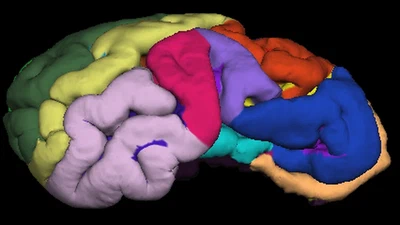
Sheep Cortex

See this poster on Figshare for some more details.

Contact

Connect

I'm always open to discussing new projects, opportunities, or just having a chat.

Find me on