Are olfactory stimuli able to induce emotional responses in a positive context in ewes?
juil. 24, 2025·
,
,
,
,
,
,
·
0 min. de lecture
Inès Achin
Céline Parias
Mélody Morisse
Baptiste Mulot
Gaëlle Lefort
Scott A. Love
Elodie Chaillou
Résumé
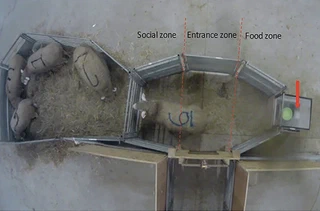
The perception of olfactory stimuli can influence animal emotions and behaviors, which are critical for survival and adaptation. This study explored the properties of three olfactory stimuli (orange essential oil, wolf feces, and cadaverine) to induce emotion in sheep, in a non-stressful environment enriched with social and food resources. Contrary to expectations, wolf feces, while repellent, did not trigger overt stress behaviors such as increased vocalizations or agitation. Similarly, orange essential oil did not elicit strong positive valence responses, suggesting that the positive experimental context may mask its effect. Interestingly, cadaverine, typically associated with body decomposition, has no impact on sheep behaviors except that is induced emetic responses in two individuals, indicating potential disgust. Overall, this research highlights the complex interplay between social, food, and environmental factors in shaping the emotional responses of sheep to olfactory stimuli, underscoring the importance of context and individual variability. These findings contribute to a better understanding of olfactory influences on animal welfare and behavior.
Type
Publication
Animal