Scott Love

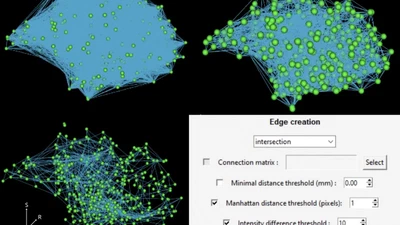
3DBrainMiner: An open-source platform for modelling and visualizing the brain as graphs

Graph-based modeling is widely used to represent the structural and functional complexity of the brain, supporting applications such as disease prediction, pathology …

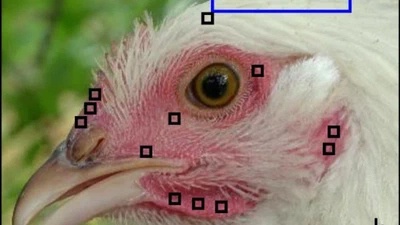
Facial blushing and feather fluffing are indicators of emotions in domestic fowl (Gallus gallus domesticus)

The study offacial expressions inmammals provided great advances inthe identification of their emotions and then inthe comprehension oftheir sentience. So far, this area of …

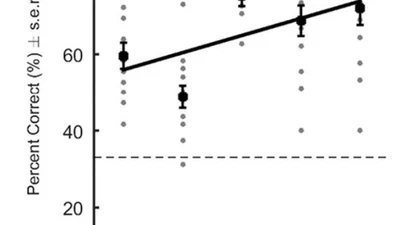
Overlapping but divergent neural correlates underpinning audiovisual synchrony and temporal order judgments

Multisensory processing is a core perceptual capability, and the need to understand its neural bases provides a fundamental problem in the study of brain function. Both synchrony …

Familiarity and voice representation: From acoustic-based representation to voice averages

The ability to recognize an individual from their voice is a widespread ability with a long evolutionary history. Yet, the perceptual representation of familiar voices is …

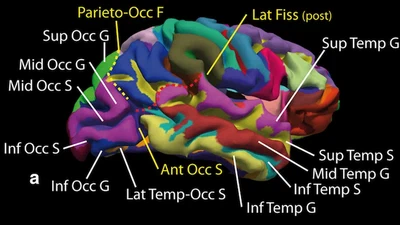
A practical guide for the identification of major sulcogyral structures of the human cortex

The precise sulcogyral localization of cortical lesions is mandatory to improve communication between practitioners and to predict and prevent post-operative deficits. This …

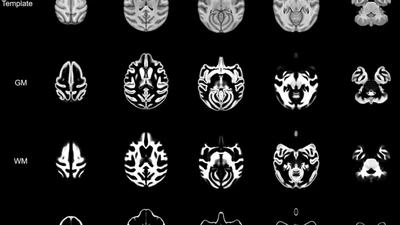
The average baboon brain: MRI templates and tissue probability maps from 89 individuals

The baboon (Papio) brain is a remarkable model for investigating the brain. The current work aimed at creating a population-average baboon (Papio anubis) brain template and its …

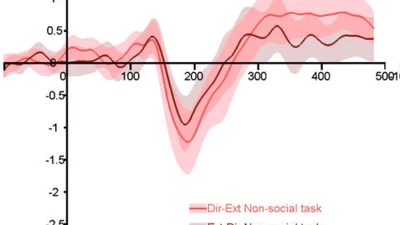
Social decisions affect neural activity to perceived dynamic gaze

Gaze direction, a cue of both social and spatial attention, is known to modulate early neural responses to faces e.g. N170. However, findings in the literature have been …

The role of kinematics in cortical regions for continuous human motion perception

It has been proposed that we make sense of the movements of others by observing fluctuations in the kinematic properties of their actions. At the neural level, activity in the …

Uni- and multisensory brain areas are synchronised across spectators when watching unedited dance recordings

The superior temporal sulcus (STS) and gyrus (STG) are commonly identified to be functionally relevant for multisensory integration of audiovisual (AV) stimuli. However, most …